

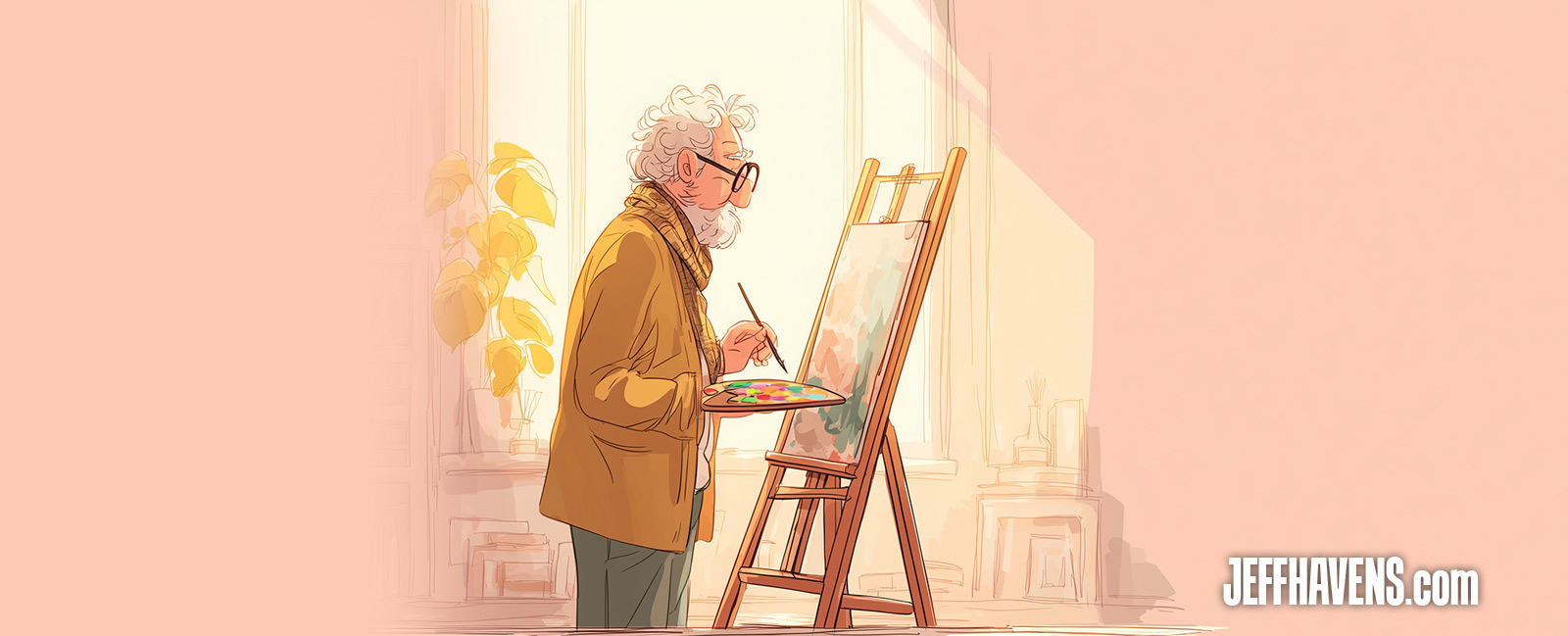
This month I read a news article about aging that I found interesting enough to want to share. Long story short, an increasing body of research suggests that, contrary to conventional wisdom, it is actually possible to improve both physically and mentally as we age into our 60s, 70s, and 80s.
There are a lot of theories as to why – but the one that stands out to me is one called “age beliefs,” which is really nothing more than what you think happens as you get older. In other words, if you think that getting older means a slow and steady decline, you’re more likely to experience exactly that – and if you think getting older means expanding your horizons and opportunities in new ways, you’re more likely to experience that instead. Specifically, “more optimism about aging was associated with better health outcomes, including a 7.5-year longer lifespan.”
Think about that for a second. You could live almost a decade longer simply by manipulating the way you think. That sounds like a lot less work than eating right and exercising.
I’ve often said that we are the stories we tell ourselves. Whether we think people are generally good and kind or duplicitous and untrustworthy, we tend to find examples to support our philosophy. Whether we think we’ll be able to accomplish something or are completely incapable of getting what we want, we tend to be right. I’m not trying to suggest that our internal storytelling is the final arbiter of how our lives go, but I do believe it has an influence.
I’ve seen this play out personally. My stepfather, who is about to turn 80, spent a few years dealing with a variety of illnesses that stole half of his hearing and some of his mobility. Consequently, there are things he used to do – hiking, hunting, fishing – that he simply can’t do anymore. It would have been very easy for him to tell himself that he was just getting older and there wasn’t anything to do about it. But instead, he decided to find a hobby he could handle, which ended up being painting. With exactly zero experience, he bought some supplies, watched a bunch of YouTube videos, and started painting landscapes.
And you know what? They’re pretty good! They’re certainly better than anything I could paint. Part of the reason for that, of course, is because he’s spent a lot of time practicing. But another part of the reason is because he’s spent a lot of time telling himself that he might be able to become an accomplished painter, while I’ve spent most of my life telling myself that my artistic skills peaked in the 3rd grade.
The point I’m wandering towards is that our thoughts play a powerful role in shaping our possibilities. The difference between “I can’t do this” and “I’ve never done this, but I can probably figure it out” isn’t just semantic – it has a tangible impact on our actual lives.
So I hope this month you spend some time thinking about the various stories you’re telling yourself about your skills, abilities, potential, and prospects. If you think your best days are behind you, then you’re probably right. But if you think some of them are still ahead, guess what? You’re also probably right.